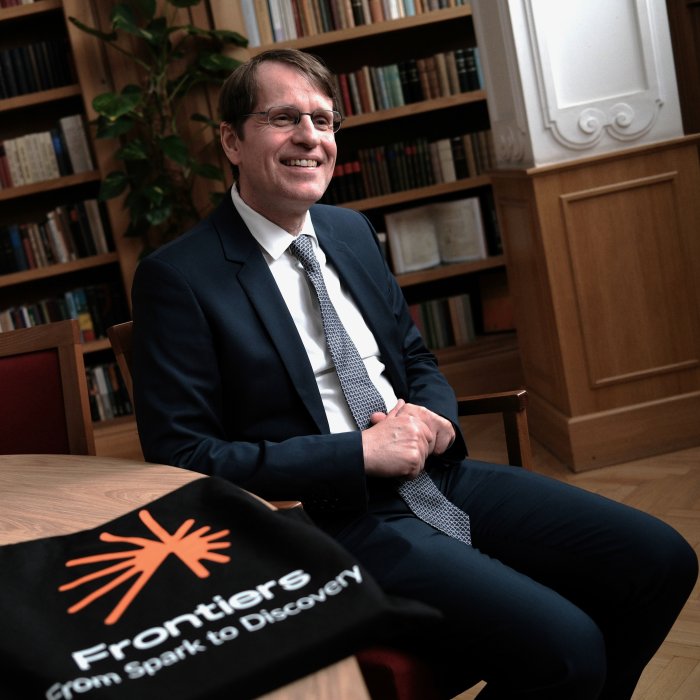
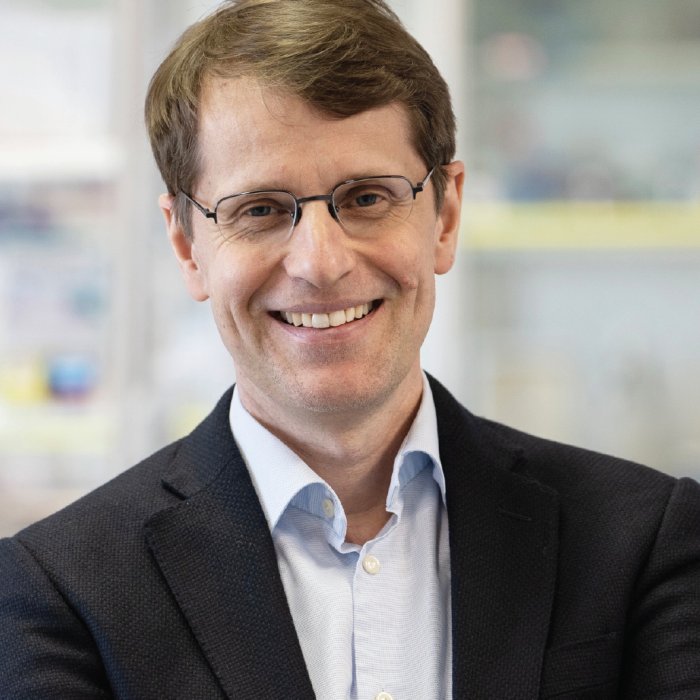
The goal of the Frontiers Foundation is to attract the world’s most renowned scientists to Hungary and to establish world-class research centers here. The strength of the initiative is demonstrated by the fact that Botond Roska, a Wolf Prize-winning vision researcher, was the first to join the Frontiers Foundation following a personal invitation from Ferenc Krausz, the foundation’s founder. Roska has now presented his latest revolutionary medical procedure at his institute in Basel.
MoreHungary’s greatest asset is the expertise of its talented and diligent people. However, many leading researchers pursue advanced research and innovation opportunities abroad.
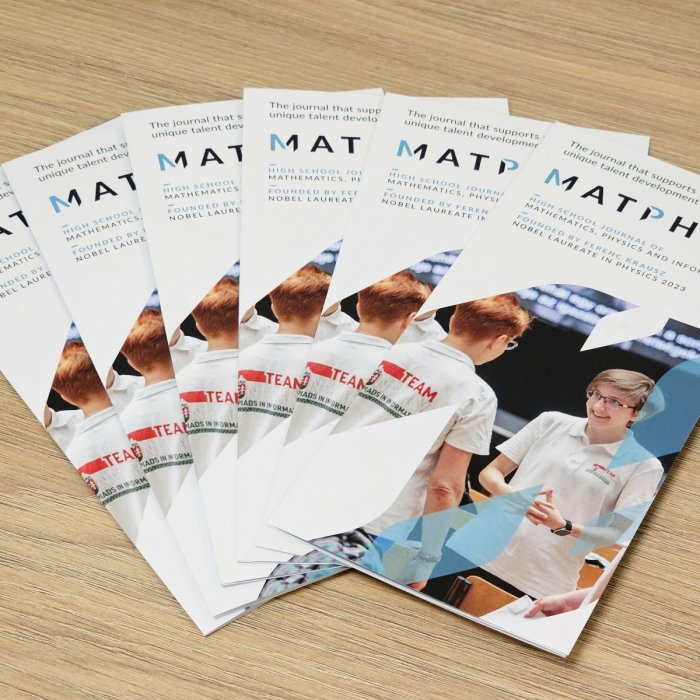
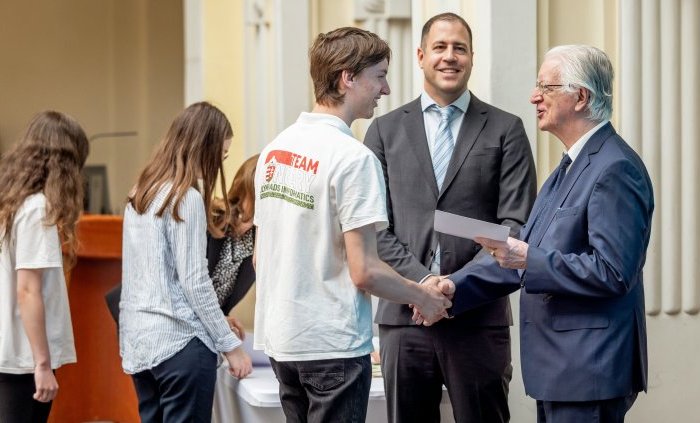
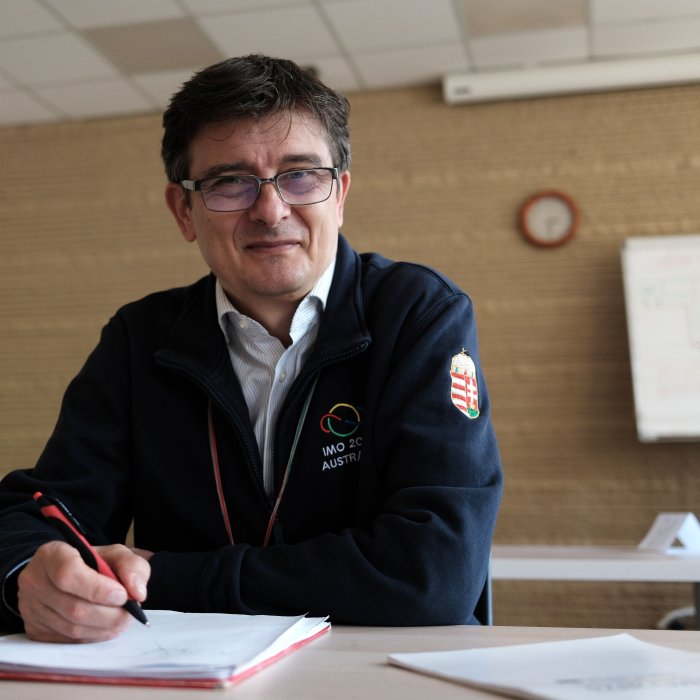
MoreWhat happens when 25 of the country’s most promising young mathematicians retreat to Lake Balaton for four days to live exclusively for science? The answer is found in Balatonszemes, where the Olympic School's latest mathematics preparatory course took place. Powered by Frontiers, the Matfin initiative is a creative workshop for future generations.
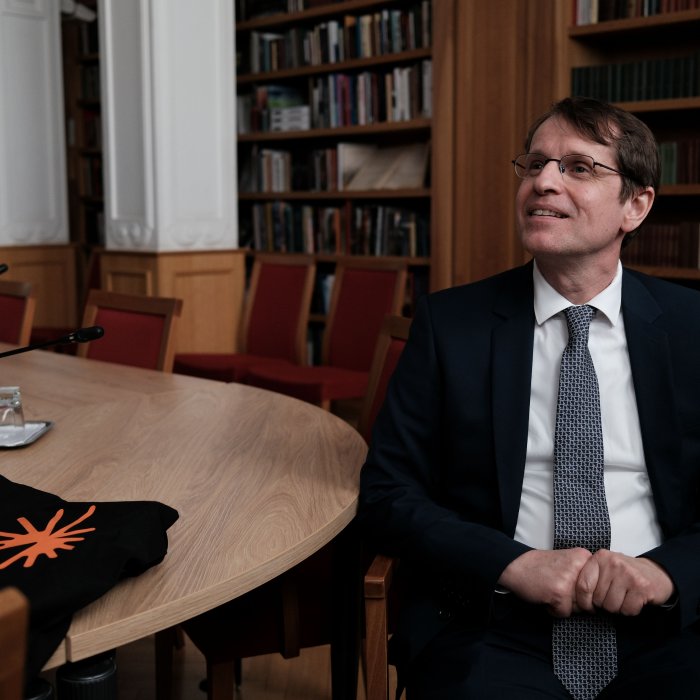
MoreFerenc Krausz, Chair of the Board and Initiator of the Frontiers Foundation, has received another prestigious international honor. The National Academy of Sciences (NAS) has elected 120 new members and 25 international members in recognition of their distinguished and ongoing achievements in original research. Among them is Prof. Ferenc Krausz, whose election further strengthens his standing in the global scientific community.
MoreHungary’s most important resource is the knowledge built on talent and hard work. Developing this resource is the only path to lasting value creation and long-term prosperity.
MoreThe Nobel Foundation has published Ferenc Krausz’s biographical summary on its official website. The Nobel Prize-winning physicist’s text is not only a chronicle of a scientific career, but also a deeply personal reflection on his family background, the fundamental role of Hungarian education, and his belief that basic research can transform the future of healthcare.
MoreAz Élvonal Alapítvány megalakulása után párbeszédet kezdeményezett a magyarországi tehetséggondozás szereplőivel, köztük a Nemzeti Tudósképző Akadémiával. A párbeszédet egyeztetések követték, amelyek során a többször, bizonyíthatóan igényelt adatigényléseket a Nemzeti Tudósképző Akadémia (NTA) több felkérés ellenére sem teljesítette. Az egyeztetéseket az NTA egyoldalúan megszakította, így az Élvonal szándékai ellenére nem jöhetett létre megállapodás – hangzott el azon a háttérbeszélgetésen, amelyet Krausz Ferenc, az Élvonal Alapítvány kezdeményezője, és Madaras Markó, az alapítvány főigazgatója tartott április 24-én.
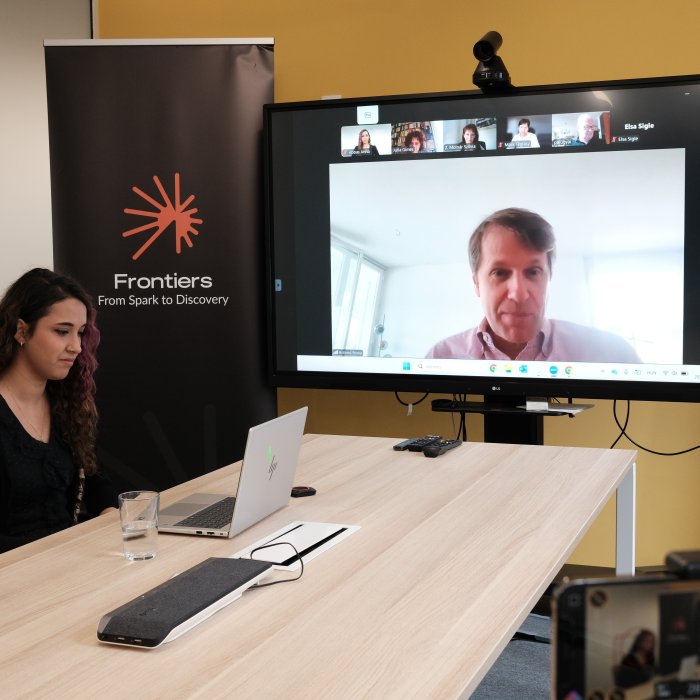
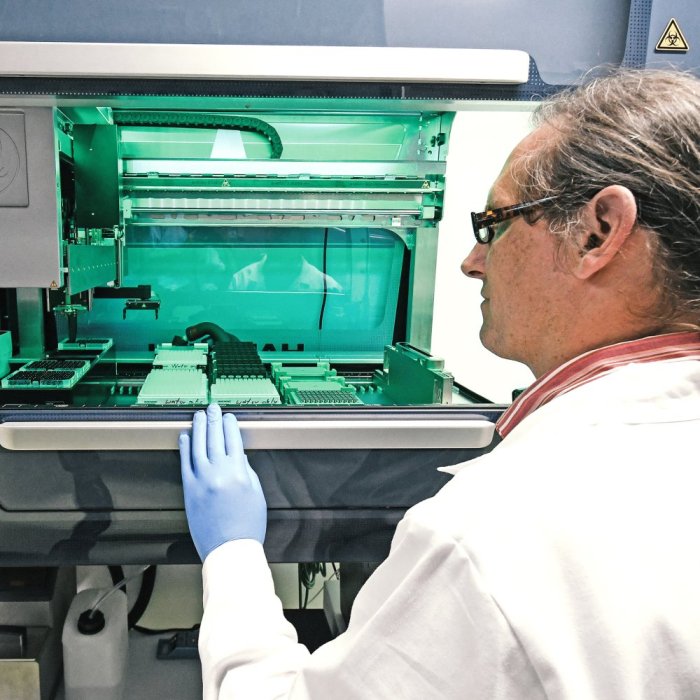
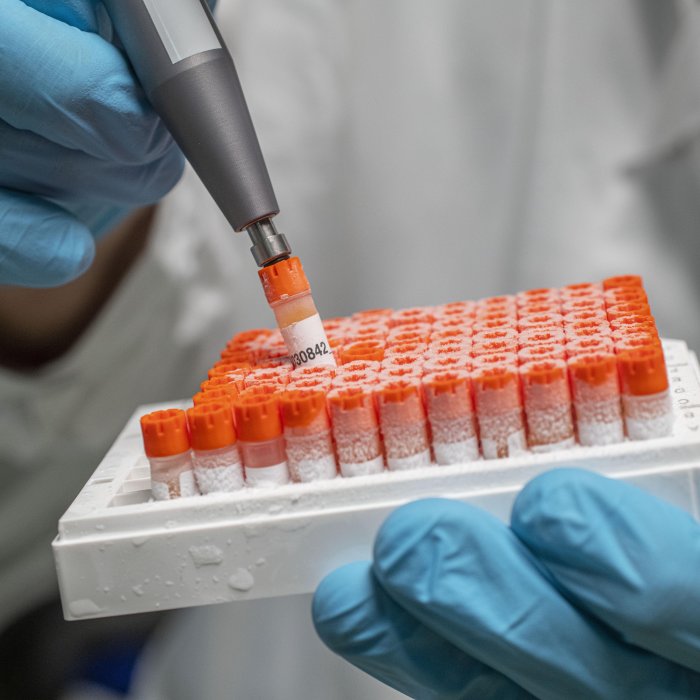
MoreThe recent findings of Botond Roska and his research group may introduce radically innovative methodologies for treating visual impairments: their approach involves the targeted delivery of healthy mitochondria into dysfunctional cells. Our team joined the press conference from the Frontiers office, which showcased the latest study published in Nature. The study was conducted by Botond Roska and 28 other international researchers.
MoreAs the first top-level researcher to join the Frontiers Fellow community, Botond Roska shared his perspectives on the new Hungarian knowledge center and his scientific achievements. The Wolf Prize-winning researcher believes that science is more than a job. It is a full-time way of life that requires long-term dedication.
MoreThe internationally renowned, Wolf Prize–winning neurobiologist’s gene therapy developments offer new hope in treatment for people with visual impairments or blindness. As the first Fellow of Frontiers, he will build a knowledge center in Hungary.
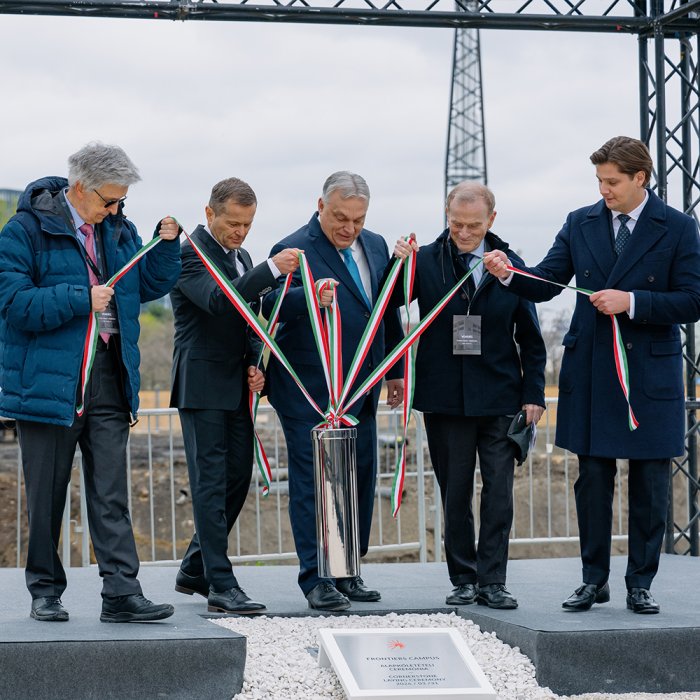
MoreHungary’s key resource is knowledge built on talent that knows no borders. Preserving and developing it is the cornerstone of future competitiveness, which is why the Frontiers Campus is being built—said Ferenc Krausz, initiator of the Frontiers Foundation, at the foundation cornerstone–laying ceremony of the building complex on March 31 in Budapest.
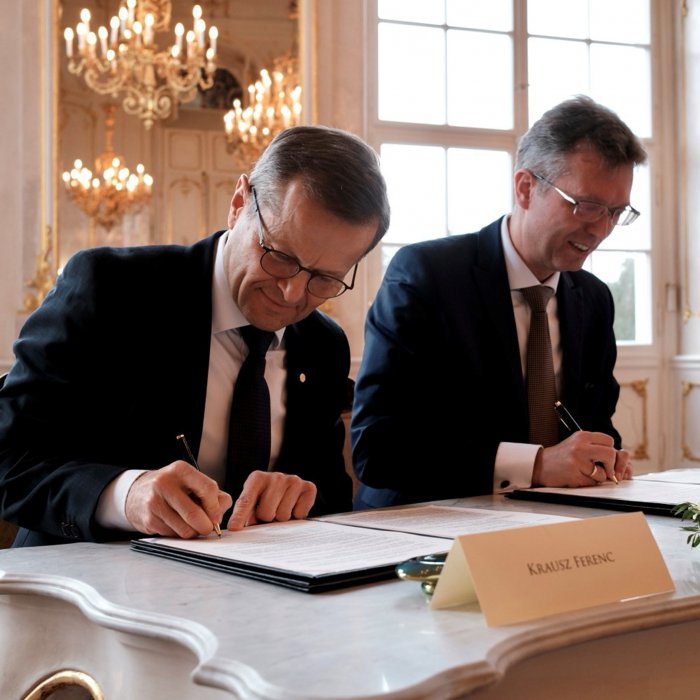
MoreOn February 20, the Government of Hungary and the Frontiers Foundation signed a 25-year strategic framework agreement and a 6-year financing contract, establishing a predictable, long-term foundation for the development of Hungary’s research and innovation ecosystem.
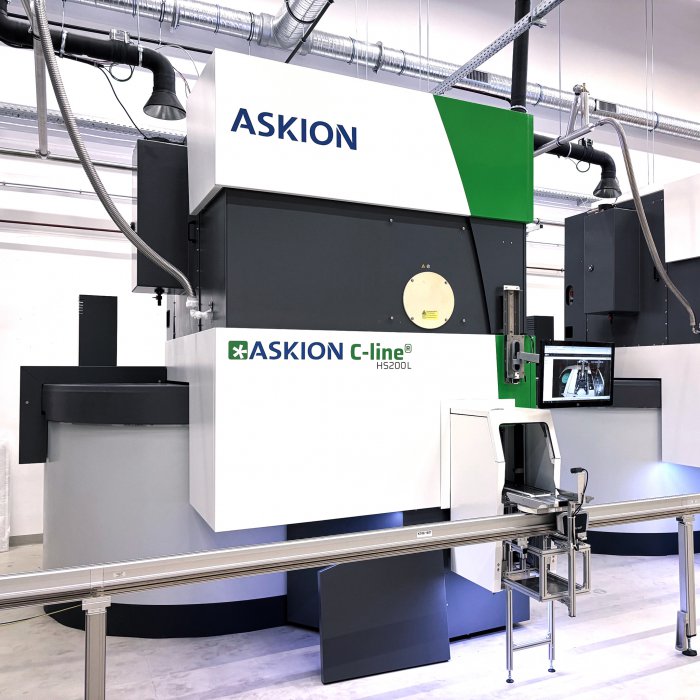
MoreSample storage has reached a new level at the CMF Biobank, Szeged: the first Askion automated cryogenic units have arrived, ensuring the long-term molecular integrity of blood plasma samples at -150°C. The first system tests have been successfully completed.
MoreOur research center's H4H Program was among the first to receive the designation of a nationally strategic medical research project.
More